
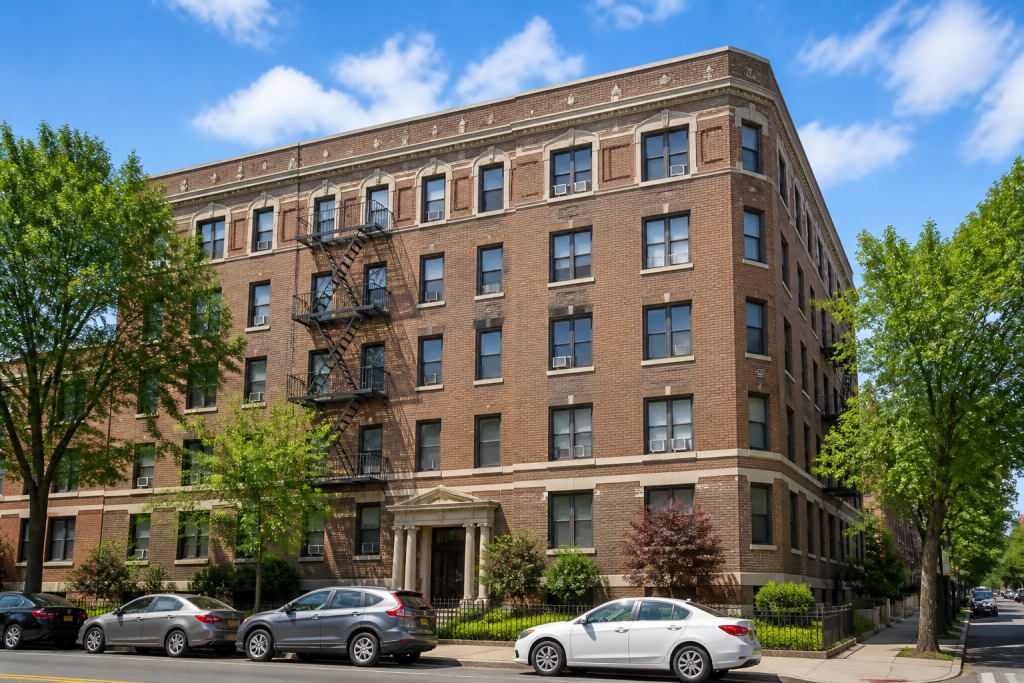
Apartment building insurance is the commercial policy for a rental building with five or more units: the structure, the owner’s liability, and the rent that stops if the building cannot be occupied. A landlord policy written for a house or a duplex does not do that job. Once you cross into 5+ units, carriers treat the risk as habitational commercial—and the form, the limits, and the deductibles all change.
This is for owners of a specific apartment building (or a small set of them), not HOA boards and not someone insuring a single-family rental. If you want the current policy read against the building you actually own, contact Aegis.
Aegis Group is an independent insurance brokerage. We work for the owner, not the carrier.
When a building needs apartment building insurance
Most personal-lines landlord products stop being the right tool at five units. Below that, some owners still sit on a dwelling/landlord form. At 5+ units you are in commercial territory: higher limits, shared systems, common areas, and income that a mortgage lender will want protected.
Apartment building insurance is the building-level name for that placement. Multifamily insurance is often the same coverage described as a portfolio. If you own one walk-up or a small mid-rise, this is the language that matches the asset.
It is not:
- Renters insurance (tenant contents and tenant liability)
- An HOA master policy (association-owned condos and townhomes)
- Homeowners coverage on the building you live in and rent two rooms of
Aegis’s real estate insurance work starts with the building: construction, occupancy, statement of values, and what the current form actually pays after a loss.
The three parts that have to work together
1. Property: can you rebuild this building?
Property coverage is the building, attached structures, and (if scheduled) business personal property—boilers, appliances the owner furnishes, office contents in the leasing office.
Ask, in writing:
- Replacement cost or actual cash value? Depreciation on an older brick walk-up is a large hole.
- Does the limit match today’s rebuild cost, not the purchase price or last year’s schedule?
- Are the roof, HVAC, laundry, and any detached garage or carport actually on the form?
- Is ordinance or law included if the building cannot be repaired to the old code after a fire?
A 24-unit building that is insured for what it cost in 2016 is not insured. Lenders will notice. So will a claim.
Water is still the loss that hits apartment buildings first: supply lines, drain backup, roofs, and unit-to-unit seepage. Confirm which water perils are covered, whether backup is endorsed, and whether the water deductible is separate from all-other-perils.
2. Liability: who gets hurt on your property?
General liability responds when a tenant or visitor is injured—or when you are alleged to have damaged someone else’s property—in connection with the building. Stairs, sidewalks, parking, hallways, and any pool or courtyard are the frequency drivers.
A limit that was copied from a duplex is not a limit for a 40-unit building with a parking lot. Umbrella coverage sits over the primary liability (and often the auto/employers exposure if you have staff and vehicles). That is how a serious injury stays a claim instead of an equity event.
If you have on-site maintenance or a manager, workers’ compensation is a separate requirement, not a substitute for GL.
3. Loss of rents: the building can be standing and still not pay the note
Loss of rents (business interruption for the building) replaces rental income while units are uninhabitable after a covered property loss. It is the line owners skip and then miss when a fire or water event takes a floor offline for months.
Check:
- Waiting period (how many hours or days before it starts)
- Indemnity period (12 months is not always enough for a full rebuild)
- Whether the limit matches actual collected rents, not a round number
- Whether extra expense (board-up, temporary boilers, tenant relocation you choose to fund) is addressed
Property without loss of rents is a half program. You can rebuild and still miss debt service.
What a landlord policy misses on a 5+ unit building
Owners who grew from one house into a small apartment building often keep the old structure: a dwelling form, a cheap GL add-on, no loss of rents, actual cash value on the roof.
Typical gaps:
- Unit count and construction that no longer fit the form
- No ordinance or law on a pre-1990 building
- No equipment breakdown on boilers and HVAC
- Flood excluded (almost always) with no separate decision
- Mortgagee requirements the current policy cannot satisfy at sale or refinance
If a lender, buyer, or new partner is about to look at the building, have the policy read first. Coverage and protection are not the same thing.
How to shop one building without shopping only on premium
Do not start with three quotes. Start with a file the market can underwrite:
- Current policy, including endorsements
- Statement of values and a current rebuild estimate for this building
- Five-year loss runs
- Roof age, plumbing type, updates, occupancy, amenities
- What you will not trade: replacement cost, water, loss of rents, a deductible you can fund
An independent broker can tell you when admitted paper is gone and what surplus lines changes on the form. Aegis has placed more than $4 billion in real estate insured value across 40+ states, with offices in Wichita and Dallas–Fort Worth. Scale and history are on About Aegis.
Before the next renewal
- Start 90–120 days out
- Read a non-renewal or change-in-terms letter the day it arrives
- Require tenant renters insurance
- Compare this year’s form to last year’s, line by line, before you bind
Request a review or call 316-779-2920.
FAQs
What is apartment building insurance?
It is commercial coverage for a rental building, typically five or more units. The core pieces are property, liability, and loss of rents. It is not renters insurance and not an HOA master policy.
How is it different from multifamily insurance?
Mostly the language. Apartment building insurance is the single-asset description. Multifamily insurance is often the same habitational placement described as a community or a portfolio. Both are commercial. Neither is a house landlord policy.
At what unit count do I need a commercial apartment policy?
Five units is the usual break. Some carriers draw the line earlier depending on construction and occupancy. If you are at or above five, do not assume a dwelling landlord form still fits.
Does apartment building insurance cover tenant belongings?
No. Tenants need renters insurance. The owner’s policy is for the building, the owner’s liability, and (if purchased) loss of rents.
What is loss of rents?
It replaces rental income after a covered property loss while units cannot be occupied. Check the waiting period, the limit, and how long the coverage lasts.
Does this cover condos or HOAs?
No. Owner-held apartment buildings and association-owned condos are different placements. Do not copy an apartment form onto an HOA.