
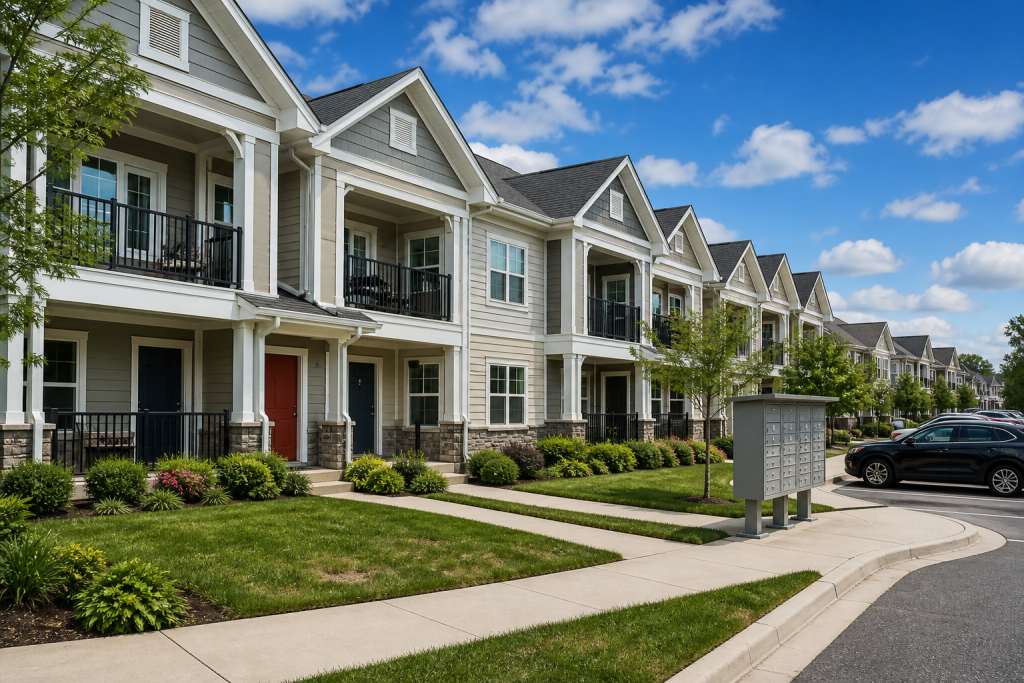
Condo association insurance is the association’s master policy. It covers the common property the board is responsible for. A unit owner’s policy (usually an HO-6) covers what the declaration leaves to the owner: contents, personal liability, loss of use, and often the interior finishes. When those two documents do not match, a water loss becomes a fight among the association, the owner, and two carriers.
This is for HOA and condominium boards, community managers, and unit owners who need the split in writing—not a slogan. Hard-market shopping for the master policy is covered in HOA Insurance: What Boards Need in a Hard Market. This article is the map of who pays for what.
If you want the current master policy read against the CC&Rs, contact Aegis. Aegis Group is an independent brokerage. We work for the association, not the carrier.
Two policies, one building
A condominium or HOA is not an apartment building the association rents out. The association insures what it is required to insure. Each owner insures the rest.
Condo association insurance (the master policy) typically includes:
- Property on buildings and common elements, to the point the governing documents require
- General liability for common areas
- Directors and officers coverage for the board
- Fidelity / crime for association funds
- Often umbrella above the primary liability
The unit owner policy (HO-6) typically includes:
- Personal property inside the unit
- Loss of use / additional living expense if the unit cannot be occupied
- Personal liability
- Loss assessment (when the association charges owners after a master-policy deductible or a coverage gap)
- Interior improvements and betterments, if the master policy stops at the studs or original specs
Neither policy replaces the other. Lenders on unit loans will ask for both: proof of the master policy and an HO-6.
Where the master policy actually stops
The declaration or CC&Rs decide how far association coverage reaches into each unit. The policy form has to match that language. The three common structures:
Bare walls (walls-out)
The master policy covers the structure to the unfinished interior surface of the unit. Paint, cabinets, flooring, fixtures, and betterments sit with the owner. An HO-6 that only covers contents is not enough.
Original specifications
The master policy covers the unit as originally built or as required by the association’s insurance section—often including standard finishes. Owner upgrades (a remodel, higher-end flooring, a kitchen gut) may still sit on the HO-6.
All-in (walls-in)
The master policy reaches further into interiors. Owners still need an HO-6 for contents, liability, loss of use, and usually loss assessment. “All-in” is not “the owner needs nothing.”
If the CC&Rs say original specifications and the policy is written bare walls, a stack failure will produce two denial letters. Aegis’s real estate insurance reviews start with that comparison: declaration first, then the form.
Deductibles, assessments, and the HO-6
Master-policy deductibles on condos and HOAs are often large: $25,000, $50,000, $100,000, or a percentage for wind and hail. That deductible is not “the carrier’s problem.” It is usually assessed back to owners, allocated by the documents, or paid from reserves.
A unit owner’s loss assessment coverage is how an individual HO-6 responds when the association bills the owner after a master-policy claim. Limits on that coverage are often too low for today’s deductibles. Boards should tell owners, in plain numbers, what the association deductible is in dollars.
Water is the claim that makes the split ugly: a failed supply line in one unit, damage in three units, and a common stack. Who pays depends on the cause, the documents, and both forms—not on who “should” be a good neighbor.
What the board still has to carry besides property
Property is not the whole master policy.
Directors and officers. Owners sue boards over assessments, collections, elections, vendors, and claim decisions. That is not a property claim. Association D&O is. See executive risk for how Aegis treats board and leadership liability; community-association D&O needs a form that fits volunteer boards.
Fidelity / crime. Someone will have access to assessments and reserves. Lenders often require a limit tied to actual funds.
Liability and umbrella. Pools, sidewalks, parking, and clubhouses sit with the association, not with each HO-6.
What unit owners still get wrong
- Assuming “the HOA covers everything inside my walls”
- Buying an HO-6 with no loss assessment, or a $1,000 limit against a $50,000 association deductible
- Skipping loss of use because “the building is insured”
- Treating a landlord policy on a rented unit as a substitute for the HO-6 the documents require
- Confusing this with apartment building insurance (that is an owner-held rental, not an association)
Boards that require HO-6 and never check certificates are running a paper rule.
Aegis Condo Protects
Aegis built Aegis Condo Protects LLC (ACP LLC) for condominium and homeowners association placements because generic commercial packages were leaving master policies misaligned with the documents—and with what the market would actually write. It is not a personal HO-6 and not an apartment program. ACP is described on About Aegis.
The firm has placed more than $4 billion in real estate insured value across 40+ states, with offices in Wichita and Dallas–Fort Worth. We still start with discovery: what the master policy pays, where it conflicts with the CC&Rs, and what a claim costs the association after the deductible.
What to do next
Boards: put the insurance section of the CC&Rs next to the current master policy. Confirm bare walls / original specs / all-in in writing. State the deductible in dollars in the next owner notice. Require HO-6 with loss assessment that can survive that deductible.
Owners: read the association’s insurance resolution, then the HO-6. If the two do not meet, fix the HO-6 before the next water claim.
Request a review of the master policy or call 316-779-2920.
FAQs
What is condo association insurance?
It is the HOA or condominium master policy. It insures common property and association liability (and usually board D&O and fidelity). It does not replace a unit owner’s HO-6.
What is an HOA master policy?
The same placement, described from the association’s side. “Condo association insurance,” “HOA insurance,” and “master policy” are how people search for it. The job is identical: cover what the association is required to cover.
Does the master policy cover my furniture and clothes?
No. That is the HO-6. Interiors may or may not be on the master policy depending on bare walls, original specifications, or all-in.
Who pays the HOA insurance deductible?
Usually the association first, then often owners through reserves or a special assessment, as the documents provide. Loss assessment on the HO-6 is how an owner’s policy may respond to that bill.
Is condo insurance the same as condo association insurance?
No. “Condo insurance” usually means the unit owner’s HO-6. Condo association insurance is the master policy. You need the one that matches your role—and most buildings need both.
Can a renter’s policy replace the owner’s HO-6?
No. A tenant may need renters insurance. The unit owner still needs the HO-6 the lender and the association require.